
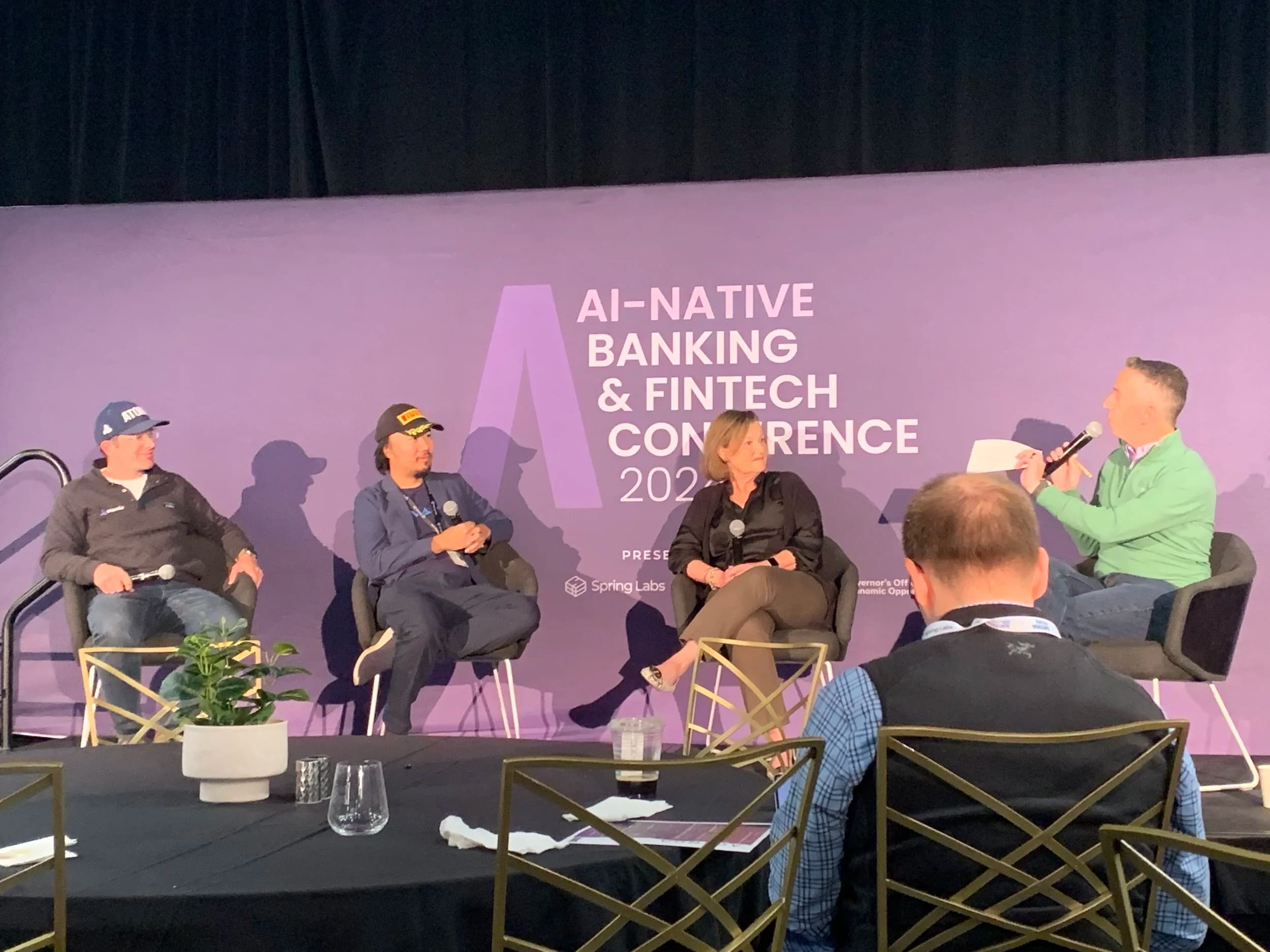
We recently attended the AI-Native Banking & Fintech Conference at the iconic Rice-Eccles Stadium. The conference, hosted by Spring Labs, provided a platform to explore the emerging topics in AI-native banking, fintech innovation, and the related regulatory landscape. With numerous engaging talks and demos, the event captured the excitement and challenges that come with integrating AI into the financial sector.
AI is Transforming the Future of Finance
AI is changing the financial sector by streamlining operations, enhancing customer experiences, and improving regulatory compliance. However, financial institutions must address key challenges, such as data integration, transparency, and cross-departmental collaboration, to fully capitalize on the benefits of AI-native solutions.
Common AI Use Cases
We spoke to numerous startup founders, bank & fintech developers, and heard their vision of how AI can be used near-term. Some of the most common use cases talked were:
Automated Risk Review
AI solutions can be used to check internal and external documents against the latest regulations (ex. privacy, BSA/AML) and check if there are any gaps. A solution that has this feature is Kobalt Labs.Complaints Handling
AI can be used to categorize customer complaints by severity or tier, allowing compliance teams to prioritize high-impact issues. One such solution is the found in the Spring Labs’ Zanko offering.IVR Alternatives
AI voice agents can transform how financial institutions handle customer inquiries. A voice agent, such as YC-backed Infer, can be used instead of a traditional IVR to capture caller emotion and intent.
Importance of Transparency in AI
A key theme that emerged from the conference was the need for transparency in AI integration. While AI holds tremendous potential to transform banking—by automating routine tasks, increasing efficiency, and enhancing customer experiences—financial institutions must ensure that AI decisions are explainable. This is especially important in a highly regulated industry like banking, and regulators are paying close attention to development in this area.
Data Integration Challenges
One of the common discussions at the conference revolved around the quality and accessibility of data. Financial institutions, particularly legacy banks, face significant hurdles when integrating AI due to fragmented data systems. Many banks have accumulated a variety of lending, servicing, and transactional systems over decades, each storing data in different formats. This fragmentation makes data integration complex and often slows down AI adoption.
As we move toward AI-native banking, it will be very important for banks to have their data organized and accessible.
Going Deep
One of the most captivating sessions was led by Peyman Hesami and Nuwan Bandara, titled “AI Workshop: From Machine Learning to Large Language Models in Fintech & Banking.” This talk covered the evolution of machine learning (ML) and its growing impact on the financial sector. The session also introduced Agentic Cognitive Architecture. This architecture aims to develop systems capable of autonomous decision-making, which could revolutionize areas like automated customer service and real-time fraud detection.
Cross-Departmental Collaboration and Compliance
One of the most critical challenges for banks and fintechs in adopting AI is achieving cross-departmental collaboration, particularly with compliance teams. AI solutions must align with regulatory requirements, and this alignment requires early and ongoing engagement from all departments within the organization.
The conference provided valuable insights from compliance leaders, who emphasized the importance of addressing each department’s specific concerns during AI implementation. By fostering collaboration and addressing compliance issues early in the development process, financial institutions can ensure that AI-driven solutions are both compliant and widely accepted across the organization.
The Future of AI-Native Banking and Fintech
The AI-Native Banking & Fintech Conference provided a wealth of knowledge and insights. From discussions on AI transparency and regulation to innovative demos of AI-driven products, the event gave a comprehensive overview of where the industry is heading.
As the financial sector continues to embrace AI solutions, the future of banking and fintech will be shaped by how well institutions balance innovation with regulatory and operational risks. We are excited to see how these developments unfold in the coming years and are grateful to Spring Labs for organizing such an insightful event.